Friday, January 15, 2021

Beef Production - Lice Infestations Rise With Mild Winter

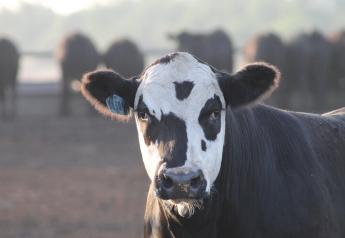
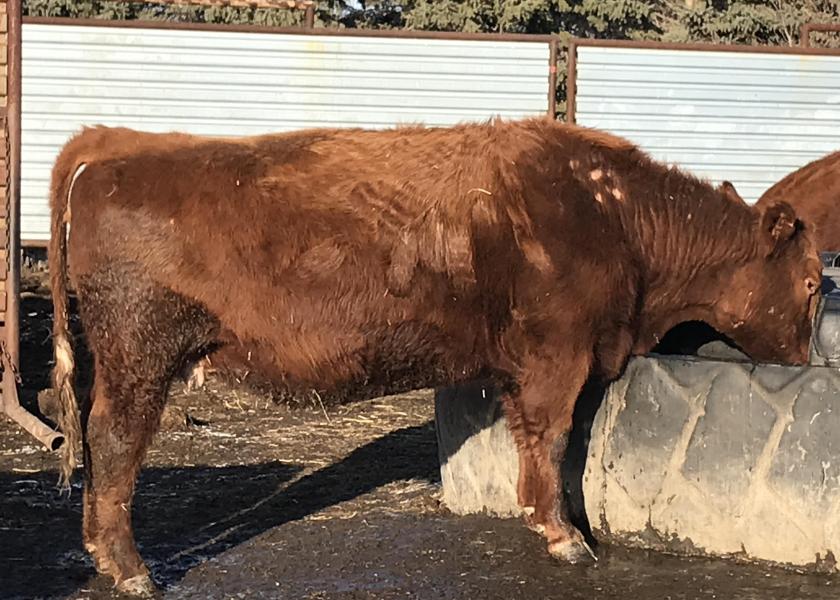
 Cow with lice

  (NDSU) Cow with lice


In the midst of one of the mildest winters in North Dakota history, many ranchers are faced with lice infestations in herds even though they have treated their cattle.

Some even have treated more than once and still are seeing the effects of lice in their livestock.

“We are experiencing lice populations that are apparently much more difficult to control than previously,” says Gerald Stokka, North Dakota State University Extension veterinarian. “We cannot be sure as to the reason for reduced lice control, but the possibility of resistance to our control products is certainly on the minds of our veterinary practitioners.”

Lice Species Common in U.S.

Five species of lice commonly are found in the U.S., with certain regions of the country seeing variation in the species present. The common species are categorized as sucking (pierce skin and suck blood) or biting (feed on skin debris).

Sucking lice include the short-nosed cattle louse, long-nosed cattle louse and little blue louse. The most common biting louse is the red louse, also known as the cattle-chewing louse.

Lice infestations increase during cold weather and subside during warm weather in response to the increased surface temperature of their host. Although most cattle become louse free in the summer months, carrier animals (about 1% to 2%) remain infected and serve as a source of reinfestation during fall and winter months.

Lice essentially spend their entire life on the animal and cannot survive off the host for more than a few days, according to Stokka. The life cycle of lice on cattle varies from three to six weeks.

Transmission generally requires animal-to-animal contact. However, lice have been shown to grasp the legs of horn flies or houseflies and take a trip to another animal.

Diagnosing a Lice Infestation

Determining a lice infestation in cattle is generally an easy diagnosis for veterinarians and many producers. One indication of a lice problem is cattle that appear to have itchy skin.

Another sign is characteristic hair loss patterns in the neck, across the shoulders and withers, and in the udder area. Some hair loss may be significant enough to result in frostbite to hairless areas, especially in extended cold winter weather.

However, light infestations are easy to overlook when examining animals individually unless the veterinarian or producer does a careful inspection. A detailed exam starts with looking for nits, then exploring for lice by carefully parting the hair.

“A systematic and defined approach to the examination of cattle for the presence of lice will enable the examiner to have a higher level of confidence in attaining accurate results,” Stokka says.

Lice Control

The pioneer avermectin (macrocyclic lactone) products such as Ivermectin and Dectomax have been used extensively to control lice because of their effectiveness. With the development of the systemic “pour on” products, along with generic products, the use increased and, in some cases, these products have been used multiple times per year.

These products are absorbed through the hair follicles, so dirt and other foreign material on the backs of cattle will limit absorption. Other control products are strictly topical with no absorption.

“So whether we are dealing with resistance in lice or less efficacy at the appropriate dose, the result is the same - a lack of adequate control,” Stokka says.

Here are a few options to help curb lice outbreaks:

•            Leave the lice alone. At this time of the year, colder weather will be an issue, thus treatment will be necessary. However, in March and April, the best solution may be to let the cattle itch for a while. Lice populations will begin to decrease in activity rapidly as the weather warms.

•            Treat only those animals showing clinical signs of itching and hair loss. Some animals may be more sensitive to the effects of lice infestations, while others can handle some lice with natural resistance. If the entire herd is showing hair loss consistent with a lice infestation, then herd treatment is necessary.

•            Determine the type of lice causing the infestation and use the correct control methods for that type. For example, sucking lice feed on blood and serum from the animal. These lice are controlled more effectively with a systemic injectable product. In contrast, biting lice feed on the dander and scurf on the skin. They are controlled more effectively with a topical treatment.

•            Use an injectable and topical treatment to control both types of lice. However, no licensed products are labeled to be used concurrently.

“When looking at topical treatments to treat biting lice, it maybe in your best interest to look for name-brand products, and to use one with a higher volume dosage,” Stokka says. “Biting lice will be controlled more effectively by the parasiticide if they come in contact with it. Thus, the higher-dosage products will give you more coverage on the animal and more area for the lice to come in contact with the product.”

 

Latest News

AL Ranch
Beef. It’s What’s For Dinner. Launches “MBA NextGen”

MBA NextGen updates the popular MBA training modules making it easier than ever for a new generation of farmers and ranchers to share their story and advocate knowledgeably for the beef industry.

8 min ago
Greg Henderson
Overall Meat Sales Higher In 2020

Meat sales - both dollar values and volume - were significantly higher in 2020. Those gains, however, came at the expense of a crippled restaurant and food service industry that may take years to recover.

9 min ago
Progressive Beef
Progressive Beef and Wendy’s® Advance Partnership

Wendy's announces 15% increase in percentage of beef sourced through Progressive Beef-certified producers in 2020; on track to meet goal of at least 50% this year.

14 min ago
Cattle and hog feeding
Profit Tracker: Cattle, Hog Margins Treading Water

Cattle and hog finishing profit margins were little changed from last week, with modest profits for cattle and losses for hogs. Beef packer margins declined again to their lowest mark since March.

8 min ago
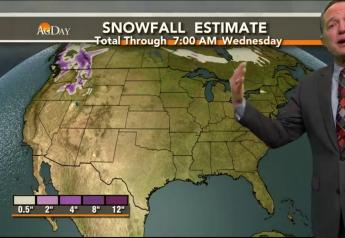
Strong West Coast Storm Could Cause Issues

Meteorologist Mike Hoffman is tracking a strong storm pushing in from the West Coast.

8 hours ago
Animal Agriculture Alliance Releases 2020 Conference Recordings, Sets 2021 Date

Sessions focus on equipping food and agriculture stakeholders with the tools needed to bridge the gap between farm and fork.

18 min ago

USDA invests $11.65M to control destructive feral swine Investment expands the pilot program to new projects in eight states PUBLISHED ON January 14, 2021


 “These awards enable landowners to address the threat that feral swine pose to natural resources and agriculture,” NRCS Acting Chief Kevin Norton said. “The projects we have identified will be key to addressing the feral swine problem.” (U.S. Department of Agriculture, Public Domain)

WASHINGTON — The U.S. Department of Agriculture (USDA) is investing $11.65 million in 14 projects to help agricultural producers and private landowners trap and control feral swine as part of the Feral Swine Eradication and Control Pilot Program. This investment expands the pilot program to new projects in Alabama, Hawaii, Mississippi, Missouri, North Carolina, Oklahoma, South Carolina and Texas.

This pilot program is a joint effort between USDA’s Natural Resources Conservation Service (NRCS) and USDA’s Animal and Plant Health Inspection Service (APHIS). This second round of funding is for partners to carry out activities as part of the identified pilot projects in select states.

“These awards enable landowners to address the threat that feral swine pose to natural resources and agriculture,” NRCS Acting Chief Kevin Norton said. “The projects we have identified will be key to addressing the feral swine problem.”

Similar to the first round, NRCS will provide funding to partners who will provide financial assistance, education, outreach and trapping assistance to participating landowners in pilot project areas. All partner work will be closely coordinated with the APHIS operations in the pilot project areas. Between the first and second round of funding, there will be a total of 34 active projects across 12 states for the life of the 2018 Farm Bill. Each project is unique, and additional information about the expectations for individual projects can be found at www.nrcs.usda.gov/FSCP.

These new pilot projects and areas were selected in coordination with NRCS state conservationists, APHIS state directors and state technical committees to address feral swine issues and damage in areas with high densities. Pilot projects consist broadly of three coordinated components: 1) feral swine removal by APHIS; 2) restoration efforts supported by NRCS; and 3) assistance to producers for feral swine control provided through partnership agreements with non-federal partners. Projects are planned to conclude at the end of September 2023.

All USDA Service Centers are open for business, including those that restrict in-person visits or require appointments. All Service Center visitors wishing to conduct business with NRCS, Farm Service Agency or any other Service Center agency should call ahead and schedule an appointment. Service Centers that are open for appointments will pre-screen visitors based on health concerns or recent travel, and visitors must adhere to social distancing guidelines. Visitors are also required to wear a face covering during their appointment. Our program delivery staff will continue working with our producers by phone and email and using online tools. More information can be found at farmers.gov/coronavirus

–USDA APHIS


Thursday, December 17, 2020

Most Passive Immunity Occurs in the First Six Hours By Glenn Selk December 15, 2020


Newborn calf taking in colostrum (photo courtesy of Todd Williams)


Resistance to disease is greatly dependent on antibodies or immunoglobulins and can be either active or passive in origin. In active immunity, the body produces antibodies in response to infection or vaccination. Passive immunity gives temporary protection by transfer of certain immune substances from resistant individuals.

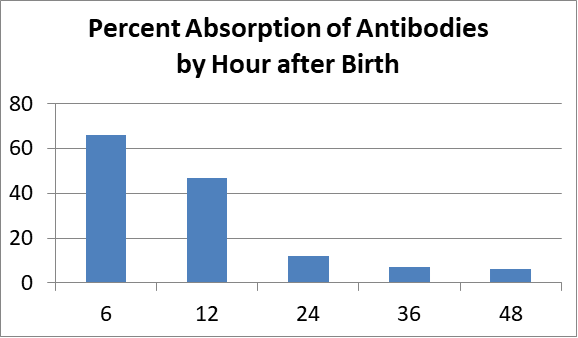
An example of passive immunity is passing of antibodies from dam to calf via the colostrum (first milk after calving). This transfer only occurs during the first few hours following birth. Research is indicating that successful transfer of passive immunity (the first day of life) enhances disease resistance and performance through the first two years of life including the feedlot phase.

Timing of colostrum feeding is important because the absorption of immunoglobulin from colostrum decreases linearly from birth. "Intestinal closure" occurs when very large molecules are no longer released into the circulation and this occurs because the specialized absorptive cells are sloughed from the gut epithelium. In calves, closure is virtually complete 24 hours after birth.

Efficiency of absorption declines from birth, particularly after 12 hours.  Feeding may induce earlier closure, but there is little colostral absorption after 24 hours of age even if the calf is starved. This principle of timing of colostrum feeding holds true whether the colostrum is directly from the first milk of the dam or supplied by hand feeding the baby calf previously obtained colostrum.

passive-immunity-chart

Provide high risk baby calves (born to thin first calf heifers or calves that endured a difficult birth) at least 2 quarts of fresh or thawed frozen colostrum within the first 6 hours of life and another 2 quarts within another 12 hours. This is especially important for those baby calves too weak to nurse naturally. Thaw frozen colostrum slowly in a microwave oven or warm water so as to not allow it to over- heat.

Thawing colostrum in a high-power modern microwave at full power can cause denaturation of the protein.  Therefore, if the colostrum is overheated and denaturation of the proteins occur, the disease protection capability of the immunoglobulin is greatly diminished.  If at all possible, feed the calf natural colostrum first, before feeding commercial colostrum supplements.  If natural colostrum is not available, commercial colostrum replacers (those with 100 g or more of immunoglobulin per dose) can be given to the calf within the first 6 hours and repeated 12 hours later.


Beef Production Methane Emissions Reduced By Novel Feed Ingredient By Industry Press Release December 16, 2020

 Cattle feeding

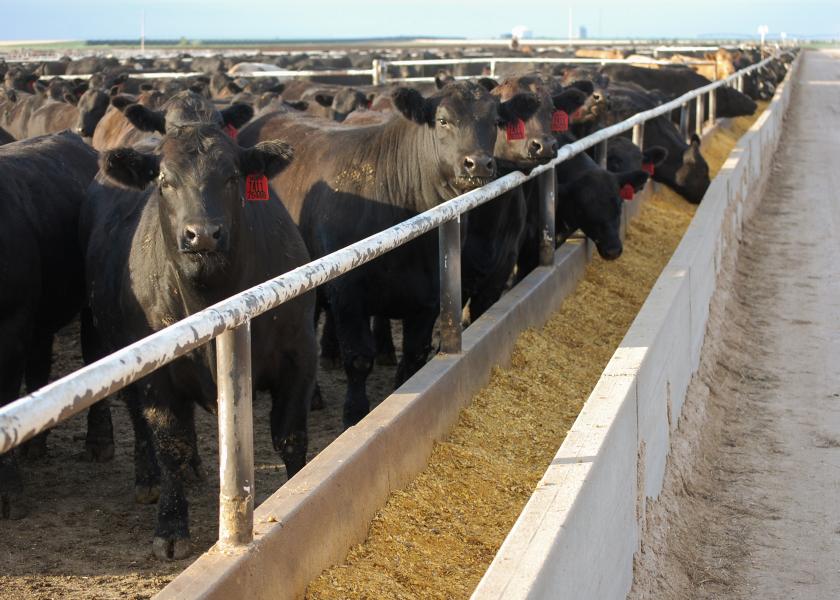
  (CAB) Cattle feeding


A two-year large-scale trial in beef cattle in Alberta, Canada has successfully demonstrated that a novel feed ingredient, developed by Royal DSM, can be included in commercial feedlot diets to reduce methane emissions by up to 80%, without negative effects on animal health and performance parameters and carcass characteristics, according to the company. This was the largest and longest trial for methane reduction in beef to date. The trial alone already reduced Greenhouse Gas (GHG) emissions by 1,473 tonnes CO2e. This is comparable to taking 500 cars off the road for a year.

The trial was conducted by a Canadian Research Consortium consisting of Agriculture and Agrifood Canada, Feedlot Health Management Services, Viresco Solutions, and DSM Nutritional Products, and with support from the Alberta Cattle Feeders Association. Emissions Reduction Alberta (ERA) committed $1.5 million to this $3 million project through its Methane Challenge. The project was recognized for having positive implications for the province due to the fact 70% of Canada’s cattle production happens in Alberta. With ~15,000 heads of beef included in the trial, it represents the largest single trial conducted on methane reduction technologies for ruminants.

Methane emission from ruminants represents a significant portion of anthropogenic greenhouse gases and contributes to climate change. Royal DSM, a global science-based company active in health, nutrition and sustainable living, has developed a feed ingredient to reduce enteric methane formation in ruminants by over 30% on average. The ingredient is scientifically called 3-NOP and is considered a breakthrough technology that inhibits methane formation in the rumen of cattle.

The trial demonstrated the commercial viability of feeding 3-NOP in backgrounding and finishing operations in Alberta’s beef cattle industry in a large-scale field trial.  The project (1) evaluated the relative effects of feeding the product on methane reduction and feedlot performance, health and carcass quality outcomes in feedlot cattle fed typical North American finishing diets (corn and barley grain based diets) as well as in a high forage, backgrounding diet, (2) evaluated direct measurement techniques for methane emissions in a commercial beef feedlot where the product was used, and (3) demonstrated the use of the product in day-to-day practicalities of commercial feedlots.

Measurements indicated that on average 70% enteric methane emission reduction was found when the feed ingredient was provided in steam-flaked or dry-rolled barley finishing diets at 125 mg/kg of feed dry matter. In steam-flaked corn-based finishing diets, a reduction in the range of 31% - 80% at the 125 mg/kg dosage of the feed ingredient was observed. Lastly, in backgrounding diets, increasing the dose of the feed ingredient stepwise from 150 to 200 mg/kg decreased the yield of methane by 17%-26% compared with control animals. The trial successfully demonstrated that  the ingredient can be included in commercial feedlot diets to reduce methane emissions, without negative effects on animal health and performance parameters and carcass characteristics.


The inclusion of the feed ingredient in the diets of cattle has resulted in real, permanent and quantifiable reductions of methane emissions and has broad applications across Alberta’s beef and dairy sector, and in feedlots globally.

Steve MacDonald, CEO Emissions Reduction Alberta (ERA), comments: “Alberta’s agricultural sector is a world leader in sustainable practices. The results of this trial highlight that further opportunities are on the horizon for beef and dairy producers to better manage methane from cattle. ERA’s investments are accelerating the solutions that will deliver the improved economic and environmental outcomes Alberta and the world need.”

As Project Leader Karen Haugen-Kozyra of Viresco Solutions states: “This trial is significant for two reasons: it demonstrates that compared to conventional feed mixes, the inclusion of 3-NOP in the diet mix for cattle has resulted in real, permanent and quantifiable reductions of methane emissions (ranging from 31-80% in finishing diets). It therefore has broad application potential across Alberta’s beef and dairy sector - and further afield. We are particularly happy also that the trial in itself generated CO2e greenhouse gas reductions (GHG) of close to 1,500 tonnes clearly showing the impact this solution by DSM can have - especially when it is on the market and scaled up.”

Mark van Nieuwland, Program Director at DSM is happy with the results of the trial: “We see the demand for low carbon beef and dairy products increasing globally. We are therefore very proud that our methane reduction solution has proven to be highly effective at scale and with this level of impact. This is the largest cattle trial DSM has ever contributed to with over 15,000 cattle tested. Our solution showcases well DSM’s purpose-led, performance driven strategy. We are very grateful also to ERA and the Alberta Cattle Feeders Association for their generous financial support to make this trial a reality and to deliver true impact for the planet’s future.”

DSM has filed the novel feed ingredient for commercial registration under the trade name Bovaer® in various geographies.

Tuesday, November 10, 2020

A walk on the wild side becomes more than just exercise Studies suggest human wilderness connection has psychological roots, could reduce disease risk PUBLISHED ON November 9, 2020

 Things we've known in Agriculture are now confirmed by science.

 Spending time in natural areas can provide positive mental and physical health outcomes and improve healing. (Courtesy Photo)


COLLEGE STATION, Texas — The emotional connection or calming feeling that accompanies a walk in a park or forest is the result of psychological needs being met, according to a recent study from researchers at Texas A&M University, the University of Georgia and the Minnesota Department of Natural Resources.

The study found that people’s attachment to the wilderness can be explained by their basic psychological needs for autonomy, relatedness and competence. Additional research links place attachment, specifically to areas where trees are plentiful, to feelings of well-being, suggesting that spending time in natural areas can provide positive mental and physical health outcomes and improve healing.

With increased stress and isolation due to COVID-19, natural areas and the psychological benefits they provide are needed now more than ever, researchers say.

“In the context of COVID-19, the benefits for human physical and mental health have become increasingly important with increases in visitation to protected areas and participation in outdoor activities such as hiking, camping and fishing,” said study collaborator Gerard Kyle, Ph.D., professor and associate department head for academic programs in the Department of Rangeland, Wildlife and Fisheries Management.

Spending time in wilderness to fulfill basic psychological needs

Kyle conducted a cross-sectional study along with a select group of his former coworkers and students, surveying 795 Americans to assess their attachment to a wilderness area that is special to them. The study, Psychological Needs Satisfaction and Attachment to Natural Landscapes, was recently published in Environment and Behavior.

Respondents were asked to evaluate their attachment based on place identity, emotional attachment and dependence and also on how well it met their needs for autonomy and emotional connection.

Results from the study showed that the wilderness area’s ability to fulfill basic psychological needs predicted the level of attachment one felt to the area.

The researchers found strong relationships between respondents’ emotional attachment and the autonomy they felt the setting provided them. Their data suggests that place identity is strongly tied to an individual’s psychological need for relatedness or emotional connection.

“Humans’ need for nature varies considerably for a variety of reasons but has also been linked to evolution. For some, the need, or trait, is strong,” Kyle said. “For many, the settings are also linked to an array of memories of past experiences with significant others. These memories can extend back to early childhood and can be deeply emotional.”

Given that individuals often partake in outdoor recreational activities with friends or significant others, the researchers were unsurprised by this finding—which also promotes further investigating the outcome of place attachment on well-being and the social benefits of wilderness areas in communities.

Creating and protecting natural spaces that promote health and well-being

Building off of the research of Kyle and associates, and others that suggest wilderness and treescapes promote physical, psychological and social health, the Texas A&M Forest Service introduced an initiative they call “Healthy Trees, Healthy Lives” in collaboration with the U.S. Forest Service and National Association of State Foresters. The agency is now furthering that initiative with Texas A&M AgriLife and the Texas A&M School of Public Health.

“We’re very excited about this collaboration, not only to bring more trees into the urban environment, but also to do the research that shows what a benefit they have both to human physical health and human mental health,” said Patrick Stover, Ph.D., vice chancellor for Texas A&M AgriLife, dean of the Texas A&M College of Agriculture and Life Sciences and director of Texas A&M AgriLife Research.

Gretchen Riley, the Texas A&M Forest Service project lead for Healthy Trees, Healthy Lives, said literature shows treescapes impact human health in three main areas—obesity, chronic disease and mental health.

As shown in Kyle’s research, being in wilderness areas can influence behaviors and contribute to psychological well-being, and supporting research shows various benefits to heart and lung health, skin care and cognitive functioning, among others, from exposure to trees.

“We know trees play an important role in human health and promote wellness,” Stover said. “We know that they attract people to the outdoors so they can exercise more, which reduces risk of chronic disease.”

Stover said research partners at Texas A&M are not only looking to encourage time spent in the wilderness and among treescapes but hope to increase the accessibility of these spaces for those who may not otherwise have regular access to greenspaces.

“It is equally as important to bring those forests into the urban centers so people can have this exposure to them right at their back yards to promote exercise and the feeling of wellness that one gets when in the presence of trees,” Stover said in a keynote address he recently delivered at an EarthX conference.

Documenting the value of green space

Kyle said when brought into cities and urban areas, natural spaces have the potential to improve well-being, beyond just physical health.

“Protected areas situated in and around cities – often referred to as green infrastructure – are important for the array of ecosystem services they afford,” he said. “We document their contribution to human wellbeing; but they have so many other benefits that will contribute to our cities’ adaptive capacity and resilience.”

Kyle said these natural areas are known to ameliorate threats of flooding, urban heat, water quality and air pollution—improving overall quality of life.

Ensuring access to natural areas has become increasingly important in the wake of COVID-19, he said, as health guidelines have restricted social interaction and time spent outside the home.

“Green spaces, particularly those close to home, provide opportunities to escape isolation in safe and healthy ways,” Kyle said.

Study collaborators included Kyle Woosnam, Ph.D., former Texas A&M Department of Recreational Parks and Tourism, RPTS, faculty member, and Samuel Keith, a 2014 RPTS graduate and current doctoral student—both in the Warnell School of Forestry and Natural Resources at the University of Georgia. The study’s lead author, Adam Landon, Ph.D., was a former RPTS student and in the Applied Biodiversity Science Program. He currently is a scientist for the Minnesota Department of Natural Resources and adjunct assistant professor at the University of Minnesota.

In addition to ensuring that more greenspaces become available, the research team contends their research cements the necessity for adequate management and protection of natural and wilderness spaces that currently exist.

“Wilderness landscapes afford a unique opportunity for self-regulated behaviors and accordingly, warrant special consideration as places of value and protection,” their Environment and Behavior article states.

–Carrie Baker
Texas A&M AgriLife Extention

Friday, October 16, 2020

TAHC Rules and Resources for Harvesting Exotic CWD Susceptible Species this 2020-21 Hunting Season

Texas Animal Health Commission 


AUSTIN, TX – The Texas Animal Health Commission (TAHC) reminds Texas landowners of statewide exotic chronic wasting disease (CWD) susceptible species requirements for the 2020-21 hunting season. 

Exotic susceptible species include North American elk or wapiti, black tailed deer, red deer, reindeer, sika deer, moose and/or any associated subspecies and hybrids. Axis deer are not classified as a susceptible species. 

 “When CWD was first discovered in far West Texas in 2012, the TAHC and Texas Parks and Wildlife Department (TPWD) took important steps toward preventing the spread of the chronic disease by establishing CWD zones in areas with confirmed cases,” said Dr. Andy Schwartz, TAHC Executive Director. “In 2017, TAHC enhanced the surveillance and movement requirements for all exotic susceptible species located within CWD zones and throughout the state.“

 Requirements for Exotic CWD susceptible species:

Properties where Exotic CWD Susceptible Species are Hunter Harvested

·     Owners of high, low, or no fenced properties where exotic CWD susceptible species at least 16 months of age are harvested must submit a mortality record to the TAHC. Mortality record forms are due to the TAHC on or before April 1 of each year. 

·     Every calendar year, landowners must have eligible mortalities CWD tested until such time that three animals are tested. An eligible mortality is a death from any cause of an exotic CWD susceptible species that is 16 months of age or older. This includes hunter harvested mortalities or herd culling, natural mortalities, or animals moved directly to slaughter. Once valid CWD test results are obtained, they are to be submitted to the TAHC and accompanied by a test submission form

 Owners Moving or Transporting Live Exotic CWD Susceptible Species

·     Any person engaged in the business of buying or selling exotic CWD susceptible species in commerce must maintain records for all exotics transported within the state or where there is a transfer of ownership. The TAHC movement record form can be utilized for data.

·     All live exotic CWD susceptible species moved or transported within the state must have official identification (ID). Contact the TAHC Animal Disease Traceability (ADT) department at 512-719-0733 for more information on official ID.

·     An owner of a property where exotic CWD susceptible species are located within a high fence must keep an estimated annual inventory for all exotic CWD susceptible species. Annual inventories are due to TAHC on or before April 1 of each year.

 In addition to the agency’s statewide movement and surveillance requirements for exotic susceptible species, hunters should be aware of the CWD zones in Texas. Hunters harvesting mule deer, white-tailed deer, elk, red deer, or exotic CWD susceptible species within the zones are REQUIRED to bring their animals to a TPWD check station within 48 hours of harvest. The CWD Containment and Surveillance Zones include the Kimble County zone, Trans-Pecos zone, South-Central zone, Panhandle zone and Val Verde County zone.

 For more information on CWD, CWD zones, and requirements:

·     CWD Zones: https://tpwd.texas.gov/regulations/outdoor-annual/hunting/cwd/cwd-zones

·     TAHC Exotic CWD Susceptible Species Page: https://www.tahc.texas.gov/animal_health/elk-deer/#cwdexotic

·     TPWD CWD Page: https://tpwd.texas.gov/huntwild/wild/diseases/cwd/#navTop