Tuesday, March 24, 2020

Coronavirus: Human strain causes fear, but domestic livestock strains are routine While wildlife may be source of China outbreak, livestock coronaviruses are common worldwide February 28, 2020 Kay Ledbetter 806-677-5608 skledbetter@ag.tamu.edu

Many people are hearing about coronavirus for the first time as the China strain, COVID-19, affecting humans causes concern all across the world. But coronaviruses are not new to livestock and poultry producers, according to a Texas A&M AgriLife veterinary epidemiologist.
cattle
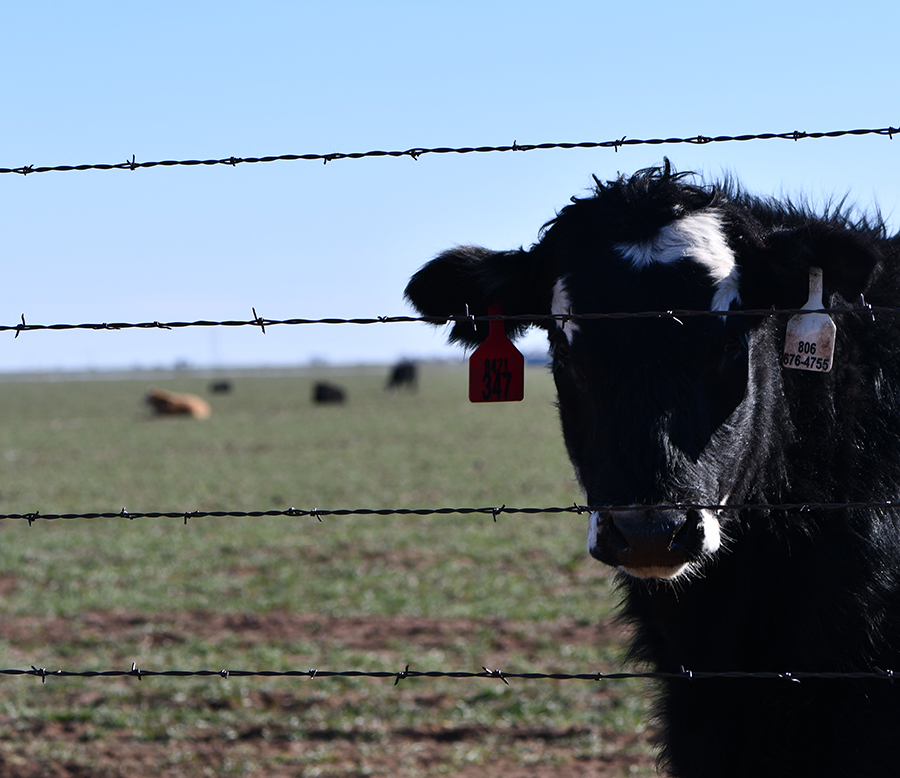
Strains of coronavirus can occur annually in domestic cattle herds. (Texas A&M AgriLife photo by Kay Ledbetter)
According to the Centers for Disease Control and Prevention, common human coronaviruses usually cause mild to moderate upper-respiratory tract illnesses, like the common cold. Most people get infected with one or more of these viruses at some point in their lives.
But the CDC is now responding to an outbreak of respiratory disease caused by a novel or new coronavirus that was first detected in Wuhan City, Hubei Province, China.
“Coronavirus is a common virus in livestock herds and poultry flocks seen routinely worldwide,” said Heather Simmons, DVM, Institute for Infectious Animal Diseases, IIAD, associate director as well as Texas A&M AgriLife Extension Service’s associate department head and extension program leader for Veterinary Medical Extension. IIAD is a member of the Texas A&M University System and Texas A&M AgriLife Research.

Wildlife in China may be human strain carriers

“In wildlife, bats are known to carry over 100 different strains of coronavirus, and wild civets are the source of the coronavirus that causes SARS (Severe Acute Respiratory Syndrome), first reported in China in 2002-2003,” Simmons said. “Although our understanding is still limited, wild pangolins (a scaly anteater) sold at live markets may be associated with the recently reported coronavirus outbreak in China.”
 Bats, civets and pangolins are all commonly sold at live markets in China, she said. Coronaviruses from wildlife are dangerous since they have the potential to mutate, adapt and spill over to new species, including humans.
“That is the concern now, this new strain of coronavirus has emerged to cause disease in humans,” Simmons said. “It is important to create an understanding of the difference between coronaviruses occurring in domestic livestock and poultry compared to coronaviruses that spill over from wildlife to humans.”

Coronavirus in domestic livestock doesn’t jump to humans

Simmons said, to date, the coronaviruses in livestock are not considered reportable diseases because their main effect is as an economic burden to livestock producers.
They are known to occur worldwide annually, with some of the most common coronaviruses found in production animals to include the scours and winter dysentery in beef and dairy cattle, porcine respiratory coronavirus in swine and avian infectious bronchitis in poultry.
The World Health Organization has reported that while another coronavirus, MERS-CoV, is known to be transmitted from dromedary camels to humans, other coronaviruses circulating in domestic animals have not yet infected humans.
“That’s what is very important to understand at this time,” Simmons said. “We have been dealing with these diseases for a long time but as of yet, we have not seen cases worldwide transmitted from livestock to humans or vice versa.”

What does coronavirus look like in livestock?

While coronaviruses have a high morbidity, or rate of illness, in livestock and poultry they are generally considered to have low mortality, rate of death, Simmons said. Coronaviruses will affect either the respiratory system or the gastrointestinal system, depending on the species and the age of the animal.

Coronavirus in cattle

In calves, diarrhea commonly occurs in animals under three weeks of age due to a lack of obtaining antibodies when the calf does not get enough colostrum from the mother in order to build up immunity. Clinical signs include severe dehydration and diarrhea. The severity of the clinical signs depends on the age of the calf and their immune status. This is often seen by producers in the winter months as the virus is more stable in cold weather. The second clinical syndrome, winter dysentery is found in adult cattle. Clinical signs include bloody diarrhea with decreased mild production, loss of appetite with some respiratory signs. Bovine coronaviruses can also cause mild respiratory disease or pneumonia in calves up to six months. The virus is shed in the environment through nasal secretions and through feces. 

Coronavirus in swine

There are multiple coronaviruses that affect swine. Like cattle, they affect the respiratory or gastrointestinal tract. In sows and piglets, porcine respiratory coronavirus usually presents with no clinical signs. If clinical signs do occur, it may be a transient cough within the herd and spread of this disease occurs through aerosolized methods.

Coronavirus in poultry

Infectious bronchitis virus, or IBV, is a rapidly spreading respiratory disease in young chicks. Clinical signs in laying hens include reduced production, eggshell abnormalities and decreased internal egg quality.

How to treat

Livestock producers should consult with a veterinarian for treatment, Simmons said. Treatment in livestock herds and poultry flocks typically includes supportive therapy of fluids. Antibiotics are not indicated for viral infections but may be used if a secondary bacterial infection occurs. 
More information can be found through the Texas &M AgriLife Extension Disaster Education Network.
-30-

National Agriculture Week 2020 A message from Texas Ag Commissioner Sid Miller PUBLISHED ON March 24, 2020

cattle (Stock photo via USDA NRCS Texas, Flickr/Creative Commons; NRCS photo by Beverly Moseley)
 National Agriculture Week and it’s the perfect time to remind Americans of the importance of the agriculture industry. It’s no accident Americans enjoy the safest, most affordable and most abundant food supply in the world. (USDA NRCS Texas, Flickr/Creative Commons)
 
AUSTIN, Texas — With COVID-19 continuing to impact communities across the country, now more than ever, we need to recognize the importance of the agriculture industry. Sunday, March 22 marks the beginning of National Agriculture Week and it’s the perfect time to remind our fellow Americans of the importance of the agriculture industry.  It’s no accident Americans enjoy the safest, most affordable and most abundant food supply in the world.
In the face of an emerging worldwide pandemic, Americans have begun to practice social distancing, settling into isolation and uncertainty.  Many question the strength of economy or healthcare system.  Yet our nation’s true backbone, our agriculture industry, remains strong.   Throughout this crisis, our nation’s farmers and ranchers continue to work tirelessly to produce the food and fiber we rely on.
National Agriculture Week is all about educating consumers. From the food we eat to the shirt on our back, agriculture influences our lives 365 days of the year. Throughout this national crisis, TDA has remained committed to a high level of service to the citizens of Texas. Texas agriculture alone is over a $100 billion-dollar industry and leads the nation in cattle, cotton, hay, sheep, wool, goat, mohair and horse production.
National Agriculture Week is also a time for farmers and ranchers to share their passion for what they do. Spending late nights and early mornings out in the field or down in the barn working until the job is done. They stay busy tending to livestock, hauling feed and baling the last of the years hay. They work in the heat of summer and in the bitter cold of winter. They make time to educate the youth and invest in the future generation of agriculture. Most importantly, they wake up loving what they do and lay down at night praying they can do it all again the following day.
This year, National Agriculture Week is March 22-28. I ask that you take a moment to thank your local farmers and ranchers for their commitment to the agriculture industry. We are blessed to live in America, where even in difficult times, we are blessed to enjoy an abundant and safe food suppy from right here at home — all thanks to agriculture. To all our farmers and ranchers, may God bless you, your families and our great nation.
An eighth-generation Texas farmer and rancher, Sid Miller is the 12th Commissioner of the Texas Department of Agriculture (TDA). A ten-time world champion rodeo cowboy, he has devoted his life to promoting Texas agriculture, rural communities and the western heritage of Texas.
— Texas Department of Agriculture

Thursday, March 5, 2020

Extra good: Which mineral supplement is needed? Posted on March 4, 2020 on Department of Animal Science Texas A&M University Agriculture and Life Sciences website written by Robert Fears

Mineral nutrition is very important for successful beef production because it impacts animal growth, reproduction, milk production and health. Cattle obtain part of their mineral requirements from forage, water and protein supplements, but the remainder of their requirements must be met through mineral supplements.

The big question is: “Which mineral supplement is needed for my cattle?” Selection of the right mineral is dependent on the geographical region, forage system, cattle production stage and other factors. Jason Banta of Texas A&M AgriLife Extension provided some considerations in mineral supplement selection at the School for Successful Ranching during the 2019 Cattle Raisers Convention in Fort Worth. The majority of this article was taken from Banta’s presentation.

Components of a complete mineral supplement include salt (primarily for its sodium content), macro minerals and trace minerals (also called micro minerals). The supplement also may contain vitamins A, E and maybe D. Macro minerals are expressed as a percentage of the diet, whereas trace minerals are measured in parts per million (ppm) or milligrams per kilograms (mg/kg). The macro and trace minerals are listed in Table 1.
-30-
Via Source The Eagle | Extra good: Which mineral supplement is needed?

Wednesday, March 4, 2020

Rabid Heifer Prompts Health Warning Following San Antonio Stock Show - Katie James March 3, 2020 02:41 PM

The Texas Department of State Health Officials has issued a notice for visitors of the cattle barn during the San Antonio Stock Show and Rodeo, held Feb. 11-14, that they may need to be assessed for possible rabies exposure. A solid black Brangus heifer being shown by a student from the Miller Grove ISD in Hopkins County developed rabies and was capable of spreading the virus in the time it was in the barn on those dates.
The notice says that the heifer was only outside of the barn while it was being shown and while being loaded and unloaded for transport. Public health officials have been in contact with those who cared for the heifer and those of the animals in the nearby stalls so their risk can be assessed.
As rabies is spread through the saliva of infected animals, anyone who put their hand in the heifer’s nose or mouth, or had contact between the animal’s saliva and an open wound or mucous membrane like the eyes, nose or mouth should be evaluated for rabies exposure by contacting their physician, the notice states. Those who didn’t have that kind of contact with the animal are not at risk of contacting rabies.
If treatment is started before symptoms begin, rabies can be prevented. After symptoms begin, it is nearly always fatal. It can take between three weeks and three months for someone who had been exposed to rabies to become ill, the agency notes.
A map of the barn, with the affected animal’s stall marked in red, is below.
San Antonio Livestock Show Barn Map

Wednesday, February 19, 2020

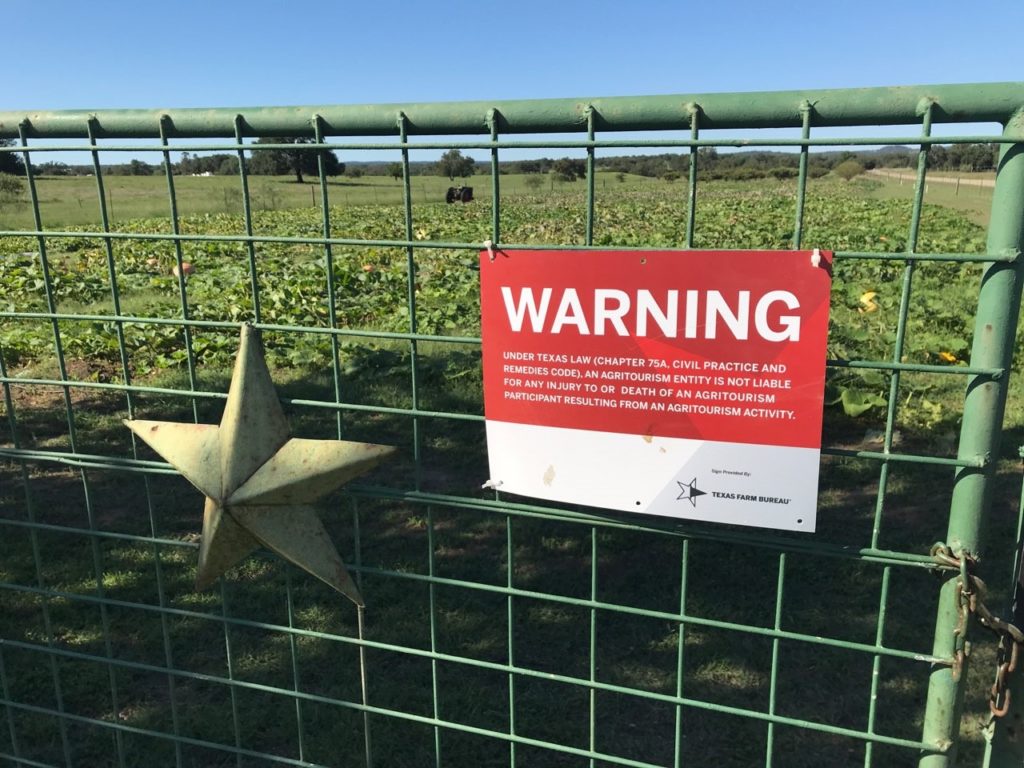
Landowner Liability Protection Resources Posted on February 17, 2020 by tiffany.dowell

One of my favorite topics is landowner liability protections.  This is an area of the law where landowners can take affordable steps before any incident occurs to protect themselves, their operations, and their livelihood. Here are some of my favorite resources related to landowner liability protection.

Tuesday, December 31, 2019

A new tomato is ideal for urban gardens (and space) Tomatoes resemble a bouquet whose roses have been replaced by ripe cherry tomatoes PUBLISHED ON December 29, 2019


 When three specific genetic mutations are combined and tuned just right, scientists can turn tomato plants into extremely compact bushes ideal for urban agriculture. Just two of these mutations (insert, left) shortens the normally vine-like plants to grow in a field, but all three (insert, right) causes their fruits to bunch like grapes. Researchers cut away the plant’s leaves for a clearer view of the new tomatoes. (Photo Credit: Lippman lab/CSHL, 2019)


COLD SPRING HARBOR, N.Y. — Farmers could soon be growing tomatoes bunched like grapes in a storage unit, on the roof of a skyscraper, or even in space. That’s if a clutch of new gene-edited crops prove as fruitful as the first batch.
The primary goal of this new research is to engineer a wider variety of crops that can be grown in urban environments or other places not suitable for plant growth, said Cold Spring Harbor Laboratory Professor and HHMI Investigator Zach Lippman, who leads the lab that designed the ‘urban agriculture tomatoes.’
These new gene-edited tomato plants look nothing like the long vines you might find growing in a backyard garden or in agricultural fields. The most notable feature is their bunched, compact fruit. They resemble a bouquet whose roses have been replaced by ripe cherry tomatoes. They also mature quickly, producing ripe fruit that’s ready for harvest in under 40 days. And you can eat them.
“They have a great small shape and size, they taste good, but of course that all depends on personal preference,” Lippman said.
Most importantly, they’re eco-friendly.
“This demonstrates how we can produce crops in new ways, without having to tear up the land as much or add excessive fertilizer that runs off into rivers and streams,” Lippman said. “Here’s a complementary approach to help feed people, locally and with a reduced carbon footprint.”
The catch is that urban setups call for compact plants that can be slotted or stacked into tight spaces, such as converted storage containers. To make up for crop yield constrained by limited space, urban farms also operate year-round to produce crops that can be quickly harvested again and again.
In a paper recently published in Nature Biotechnology, Lippman and his colleagues detail how they introduced three distinct mutations into tomatoes to create these new types of plants.
Lippman’s lab revealed in 2014 that fine tuning the SELF PRUNING (SP) and SP5G genes can cause a plant to stop growing and flower and fruit earlier, creating a compact plant that can be harvested quickly.
However, tuning SP-SP5G alone did not make tomato plants compact enough, and tuning SP too much resulted in tomatoes that weren’t tasty. Searching for a third player, Lippman’s team recently discovered the gene SIER. Modifying SIER with the CRISPR gene editing tool and combining it with the other tuned genes created these extremely compact plants.
By making crops and harvests shorter, Lippman believes that agriculture can reach new heights.
“I can tell you that NASA scientists have expressed some interest in our new tomatoes,” he said.
About Cold Spring Harbor Laboratory
Founded in 1890, Cold Spring Harbor Laboratory has shaped contemporary biomedical research and education with programs in cancer, neuroscience, plant biology and quantitative biology. Home to eight Nobel Prize winners, the private, not-for-profit Laboratory employs 1,100 people including 600 scientists, students and technicians. For more information, visit http://www.cshl.edu
–Cold Spring Harbor Laboratory
via PRNewswire

Tuesday, December 17, 2019

Wild Pigs Increase Their Urban & Suburban Area Sprawls - As wild pig territory expands into city limits, public health and safety concerns increase –Adam Russell Texas A&M AgriLife Extension San Angelo


THRALL, Texas — Whether you call them wild pigs or feral hogs, they are no longer just a rural problem, according to a Texas A&M AgriLife Extension Service expert.
Wild pigs cause more than $52 million in agricultural damage in Texas annually, said John Tomecek, Ph.D., AgriLife Extension wildlife specialist, Thrall. But it’s their encroachment into increasingly urbanized areas that is becoming a burgeoning problem for landowners and municipalities.
Texas’ wild pig population was 2.6 million according to a 2012 study. Now experts estimate their numbers have reached at least 3 million. Damage from the pest has been reported in nearly all 254 Texas counties.
Tomecek said wild pigs entering more populated areas is a growing topic of conversation. As human and wild pig populations continue to increase in Texas, he said interactions in urban-suburban areas will likely continue.
“It’s a subject that’s come up several times in the past six months,” he said. “Everyone knows about the rural problems and how they affect ag producers, but I’m getting more and more questions about pigs in the city.”
Tomecek said wild pigs’ growing confidence to enter more populated areas raises public health and safety concerns. Encounters with humans and pets and contamination of riparian areas or disease exposure are becoming more likely as wild pig numbers continue to grow and sounders range into urban-suburban areas.
“Wild pigs are becoming more brazen and ranging into populated areas,” he said. “They realize we are not going to do anything about them.”

Human interactions with wild pigs

Tomecek said people should give wild pigs a wide berth. Instances of people being injured by wild pigs is relatively low in the U.S. Most instances occurred when hunters approached the animal. But the first unprovoked human death caused by wild pigs recently occurred in Texas.
“If a person is walking and comes across wild pigs, don’t make them feel cornered,” he said. “You won’t outrun them, but they typically will give up the chase if they don’t perceive a threat. But if a person is threatened or pigs become aggressive, get off the ground. Climb a tree or a car, do anything to get elevated. If that isn’t an option, try to get away, but in that instance stay on your feet at all costs.”
Pets should avoid engaging with wild pigs, Tomecek said. He is not aware of any attacks on domesticated animals, but said that pets should avoid contact with wild pigs.
“Dogs are usually on a leash in the areas we are talking about, and that is the best solution,” he said. “You don’t want your pet near them, but if they do engage them somehow, don’t try to get in the middle of the fight.”

Property damage/Public health concerns with wild pigs

Wild pigs on urban-suburban roadways is a major property and public safety concern, Tomecek said. Vehicle versus pig accidents cost Texas drivers more than $1,100 per accident, according to an AgriLife Extension report. Human injuries were reported in 6% of those accidents.
Tomecek said damage to lawns, as wild pigs search for food resources, is another growing problem in developing areas.
Golf courses have experienced substantial damages to turfgrass by wild pigs, Tomecek said.
“When pigs access golf courses and root around trees or root up a golf green, it can get into the tens of thousands of dollars quickly,” he said. “We get calls about that type of situation frequently.”
Wild pigs are also responsible for damaging ecosystems and spreading diseases, including E. coli, to public water supplies and recreational waterways, Tomecek said. They are known to carry a disease – swine brucellosis – that is transferable to humans. Instances have been limited to situations such as hunters with an exposed open wound cleaning a wild pig carcass.
“You can still cook the meat to normal safety standards to kill anything they may carry,” he said. “But anyone handling a carcass should wear gloves and cover their mouth and eyes.”
Ecological damage beyond water quality is another concern, Tomecek said. 
“People who live in town may think that pigs don’t hurt anything, but they can contaminate water systems with bacteria and fecal matter or increase erosion and sedimentation in riparian areas.”
Wild pigs consume resources like acorns and flora that would otherwise be consumed by native species like white-tailed deer and turkeys, he said. They also have been known to prey on white-tailed deer fawns and quail eggs.
They also spread invasive plant species like tallow tree, Tomecek said. Seeds get caked in mud on their bodies as they root around. The seeds are then transferred to other locations.
“There’s no strong deterrent to make hogs wary of entering more populated areas,” he said. “When they feel humans aren’t a threat, they’ll keep ranging into these areas and causing problems.”

Be proactive with wild pigs, but be a good neighbor

Tomecek said the best way to deal with wild pigs is effective trapping. This is especially true in areas where they cannot be hunted and dispatched with firearms.
“Landowners with larger tracts of land, such as on golf courses, have been very willing to trap or cooperate with cities to curb their numbers,” Tomecek said. “But the complications of dealing with pigs comes in areas with multiple landowners, HOA rules and conflicting opinions about how to deal with the issue.”
Tomecek said landowners and cities should take proactive stances against wild pigs where possible. They should focus on public lands and right-of-ways adjacent to or near bottomlands, creeks and heavily covered areas. Wild pigs are also mostly nocturnal, which means homeowners will likely see the damage they cause before seeing the animals.
“Hogs spend a lot of time in bottomlands, but they venture out in search of food,” he said. “A lot of creeks and low-lying areas with good cover are like wild pig superhighways, so those areas, especially if there are signs of pigs, are good areas to set up a trap.”
Tomecek reiterated that “effective trapping” is important. Pigs are extremely intelligent, and trapping entire sounders is vital. Any animal that escapes is likely to avoid future attempts with similar methods.
Landowners should contact local chambers of commerce to inquire about reputable local trappers. Some trappers and trapping stations sell wild pigs at regional markets.
“Removal is the best method, especially for this urban-rural interface,” he said. “We also recommend landowners check with municipalities or state agencies when trapping inside jurisdictions or along public right-of-way. We hope all Texans will join the fight against wild pigs, but we also want them to be good neighbors while doing it.”